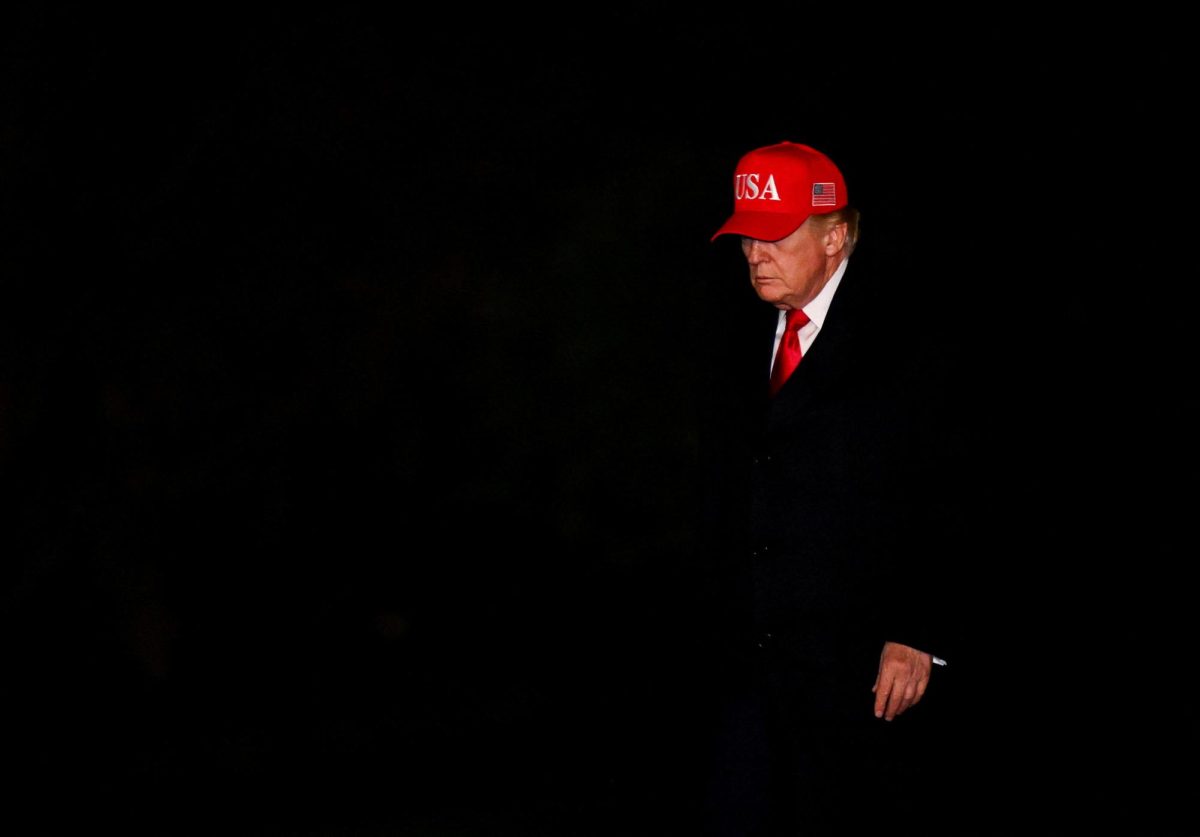
From 2016 to 2026, the U.S. has seen a drastic change in political climate; however, one person has remained constant: President Donald Trump. With a one-term break in 2020, President Trump was elected in 2016 and reelected in 2024. Though his position has remained the same, his policies, campaign platform and overall approval have not.
CAMPAIGN DIFFERENCES
While Trump’s campaigns got him elected twice, there are recognizable changes. For example, according to an article from Politico, while the 2016 campaign called for the increased security of the U.S. border, the 2024 campaign ramped up this demand, calling for a militarization of the border. This stance has been demonstrated in the recent immigration raids and U.S. Immigration and Customs Enforcement’s (ICE) increased activity in the country. Another example of amplified promises from the 2016 campaign to the 2024 campaign is through education. While the 2016 campaign focused on deterring forces from outside the classroom, influencing what was learned, the 2024 campaign made promises of closing the Department of Education and turning education back to the states. This promise is being somewhat followed through with
CHANGES IN APPROVAL
Over the course of his presidency, Trump has seen a dramatic change in his approval rating. According to polls from Gallup, Trump started his first term in 2017 with a 45 percent approval rating. During this term, his approval rating reached a low of 35 percent and a high of 49 percent. Trump started his second term with an approval rating of 47 percent. However, as of Dec. 1 2025, there has been a somewhat consistent decrease in his approval rating. According to an article from CNN, from March 19 to April 10, Trump’s approval rating was 37 percent, while 62 percent disapprove. Although Trump lost approval during his first term, he was able to regain much of the American approval at the start of his second term. However, the decrease in approval over his second term demonstrates how many have become increasingly unhappy with his actions in office over his past two terms.
CHANGES IN POLICIES AND CAMPAIGN PROMISES
According to the Federal Registry in 2017, in the first year of Trump’s first term, he passed 55 executive orders. In 2025, the first year of this second term, Trump passed 255 executive orders. The number of executive orders passed in 2025 is more than the total amount passed in his first term, according to a Pew Research article from Dec. 16 2025. This dramatic increase shows how Trump is determined to get as much passed as possible in as little time as possible.
According to a PBS article from Feb. 26, of the 75 campaign promises Trump made, about 19 percent have been kept, while 31 percent are stalled. Promises that are considered stalled are ones that are facing roadblocks from the courts or inaction from Congress and the White House. The pardoning of defendants of the Jan. 6 insurrection and saving TikTok are examples of promises kept. Promises that are stalled include requiring proof of citizenship to vote and bringing down the price of all everyday goods. One promise broken was the promise to end the Ukraine-Russia war in 24 hours.
The first executive order of Trump’s first term was the Minimizing the Economic Burden of the Patient Protection and Affordable Care Act Pending Repeal. Its goal was to minimize the provisions provided by the Affordable Care Act. The second executive order passed was the expediting Environmental Reviews and Approvals for High Priority Infrastructure Projects. This act’s goal was to expedite environmental reviews and permits in order to construct infrastructure.
The first executive order of Trump’s second Term was the Ending the Weaponization of the Federal Government. The legislation ordered the review of federal agencies during the four years before for misuse of authority and political bias. The second was the Initial Rescissions of Harmful Executive Orders and Actions. The goal of this executive order was to remove many Biden era policies that were deemed radical. The difference between the policies of teach terms demonstrates a shift in executive goals.