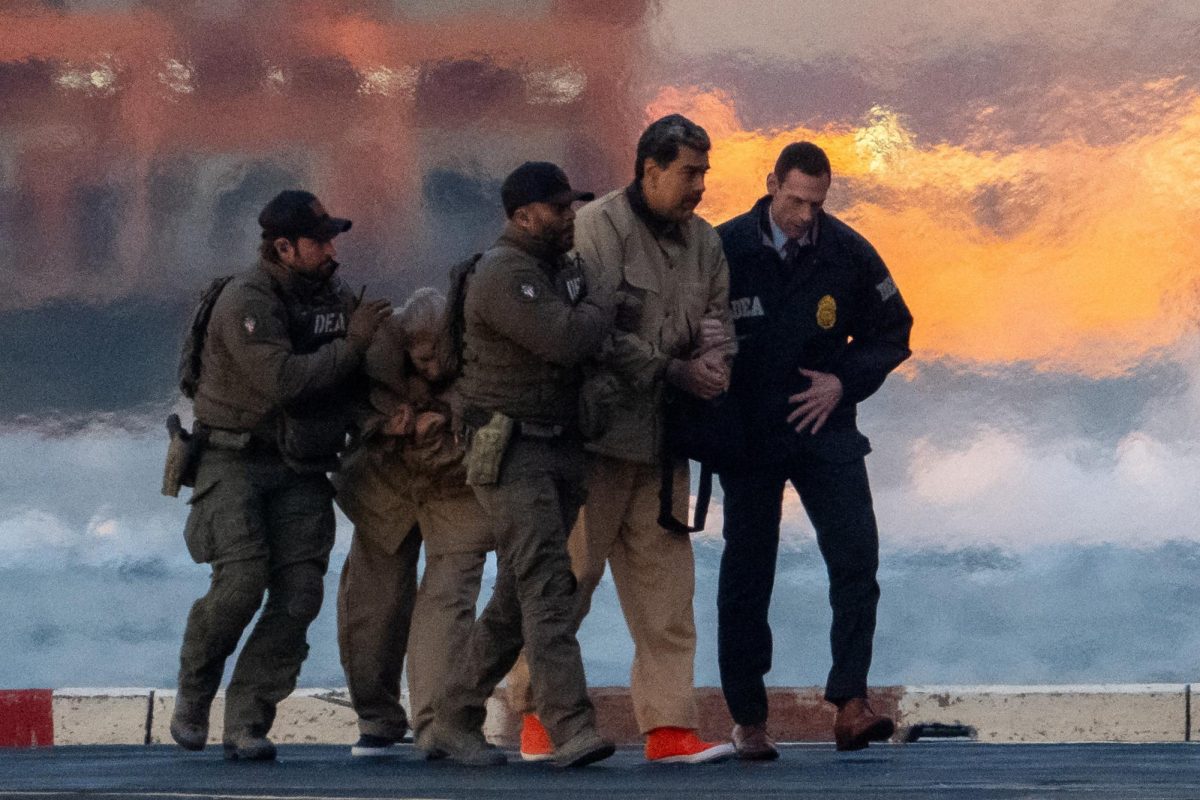
On Monday, Jan. 3, the United States captured Nicolás Maduro, Venezuela’s president, and his wife Cilia Flores during an extensive overnight operation. Ordered by President Trump late Friday night, the operation took a total of two hours and 20 minutes, involved 150 aircrafts and led to 80 deaths, according to articles from the New York Times and CNN article.
WHAT HAPPENED?
Aircrafts were launched from across the Western Hemisphere early in the morning on Jan. 3, and over 200 special operations forces took part. U.S. soldiers were in Venezuela for several hours before being able to capture Maduro and Flores from their bedroom. There were no U.S. casualties; however, several Venezuelan soldiers were wounded.
According to a New York Times article from Jan. 3, Maduro and Flores were then transferred to New York City. There, Maduro faces multiple charges, including narco-terrorism, which is the trade of illicit drugs associated with terrorism, possession of machine guns and cocaine importation conspiracy. If convicted, he could face a lengthy prison sentence. The next hearing is scheduled for March 17.
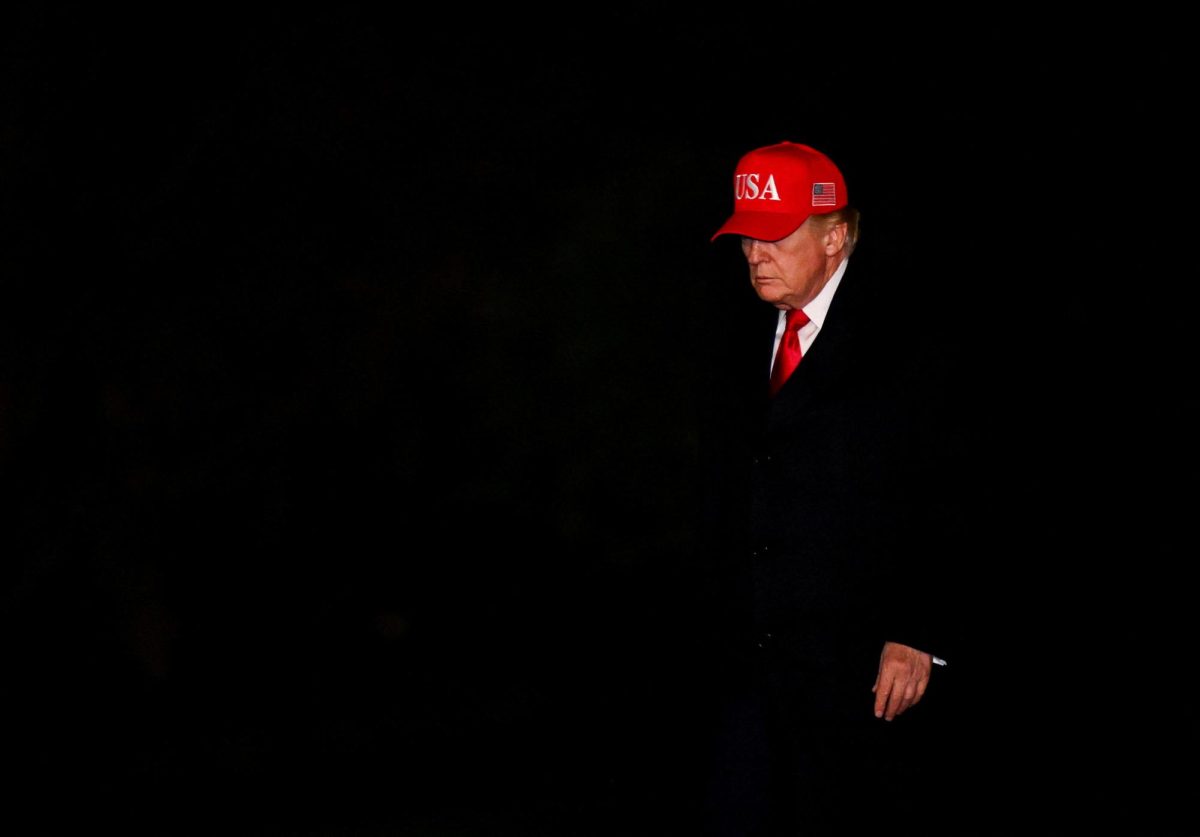
President Trump and Marco Rubio describe the operation as a law enforcement undertaking, rather than a military operation. President Trump did not notify Congress of the operation until after it was over. If the operation had been categorized as a military operation, then more congressional oversight would have been needed.
WHY DID IT HAPPEN?
According to a CNN article from Jan. 3, Maduro was first charged with “narco-terrorism” in the Southern District of New York by the Department of Justice in President Trump’s first term in 2020. That charge determined his bounty to be $15 million. During the Biden administration, the bounty for Maduro was increased to $25 million. In January 2025, the bounty was increased to $50 million. In August 2025, President Trump declared Cartel de los Soles as a foreign terrorist organization and claimed that Maduro was the president of that group.
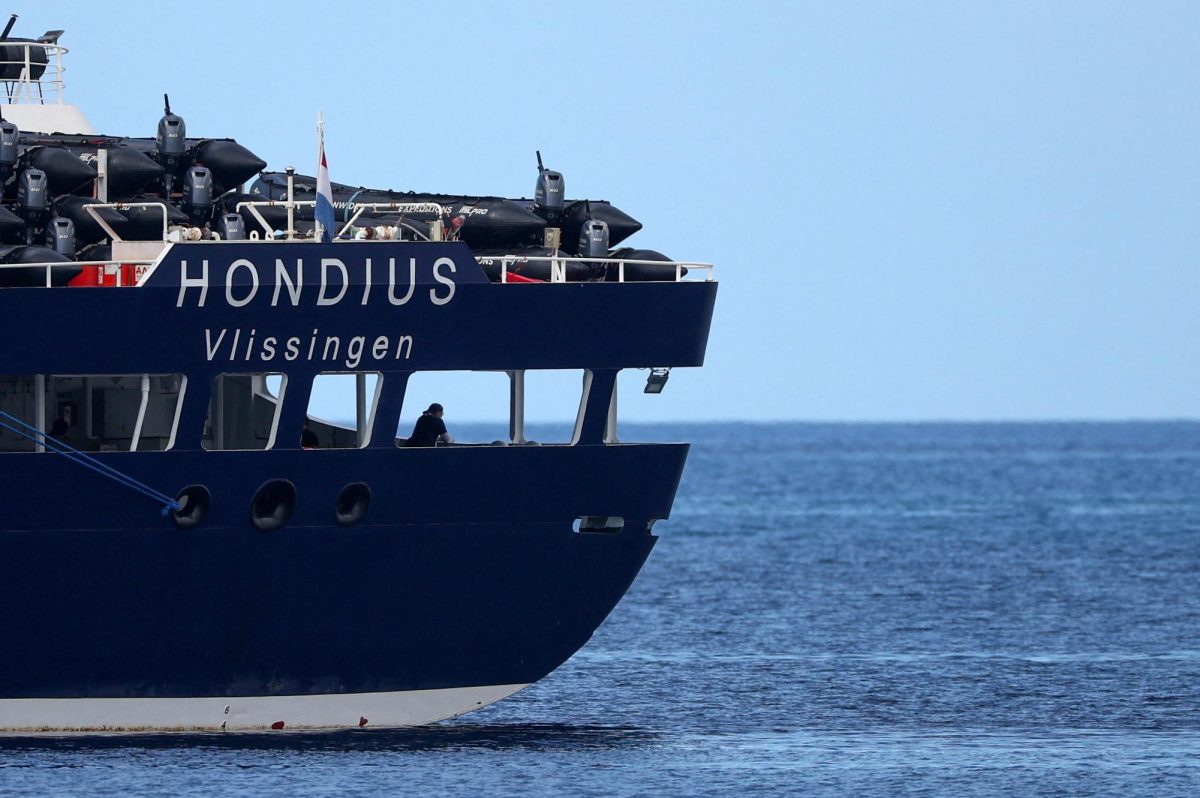
President Trump has also led what he has described as a counter-narcotics campaign, which curtails illegal drug activities. This has included strikes in the Caribbean Sea and the eastern Pacific Ocean that have destroyed over 30 boats. He ordered a blockade of sanctioned oil tankers last month, leaving and coming into Venezuela. Since then, the U.S. has seized multiple vessels, according to a CNN article from Jan. 3.
WHAT NOW?
Currently, Delcy Rodríguez is the interim leader of Venezuela. She became the vice president to Maduro in 2018, and is a leftist and a political confidant of Maduro. Rodríguez has demonstrated her desire to bring Maduro back to the country, while also expressing a desire for some level of cooperation with President Trump, according to a New York Times article from January 5.
President Trump has stated that some of Venezuela’s oil supply will be handed over to the U.S. in a social media post, according to New York Times, live updates on Jan. 6. Since the capture of Maduro and Flores, questions have continued about future control over Venezuela and its oil supply.