The long-awaited conclusion to the two-part “Wicked” film adaptation arrived with “Wicked: For Good” on Nov. 21. If the first installment built the world of Oz, the second gives it its emotional heartbeat. Anchored by jaw-dropping performances from Cynthia Erivo as Elphaba and Ariana Grande as Glinda, the film delivers a sweeping, resonant finale that stands confidently on the strength of their relationship.
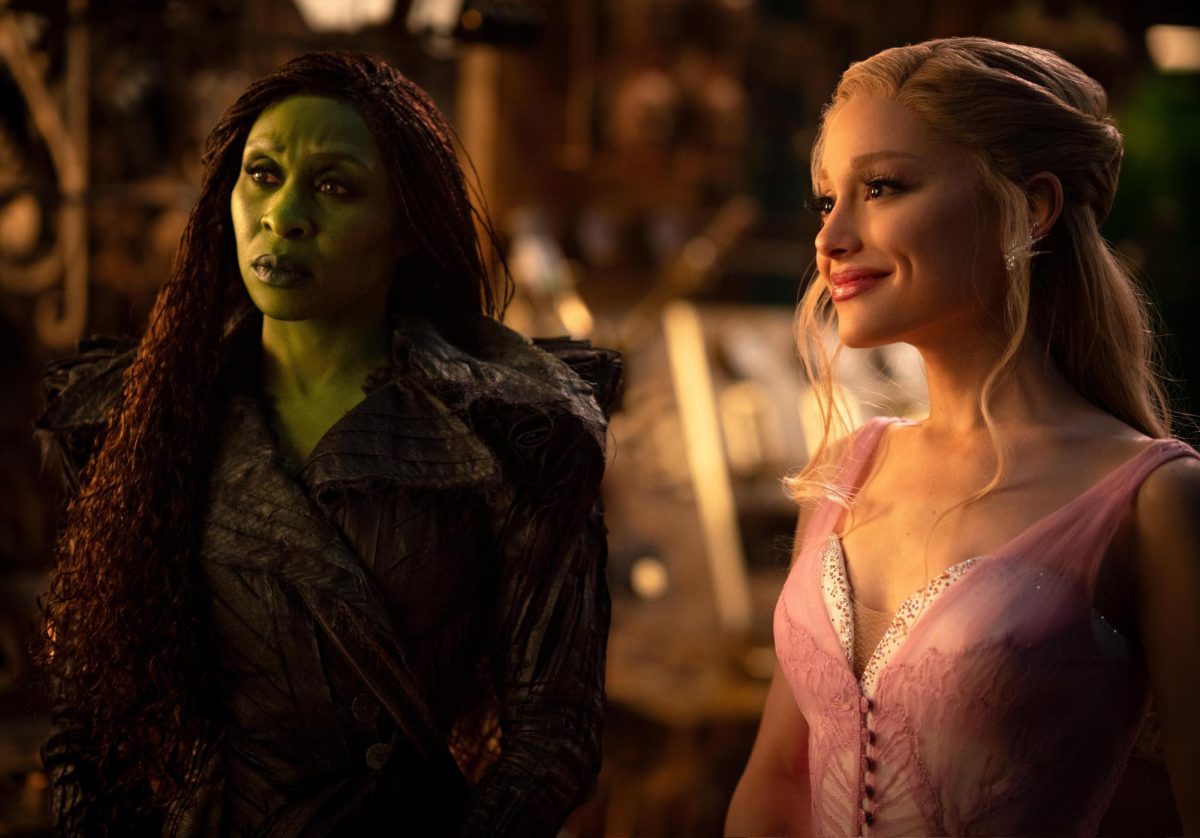
From the opening moments of the two being separated after Elphaba’s escape from Oz, it’s clear that director Jon M. Chu has centered this chapter on the evolution—and climax—of the friendship that once held Oz together. Erivo’s Elphaba is fierce, guarded and extremely vulnerable, her voice carrying the weight of someone who has spent a lifetime being misunderstood by those she loves the most. Grande’s Glinda, all shimmering poise and earnest calm, becomes far more layered and conflicted than her bubbly mask suggests. Together, their dynamic elevates the film beyond spectacle and into something deeply human.
The musical pieces are played with the same ambition to support the rest of the film. “No Good Deed,” one of Elphaba’s most explosive numbers throughout the movie, is a standout because of Erivo’s thunderous emotional performance that she intertwines with the song. Erivo perfectly captures the moment where Elphaba’s disillusionment becomes her destiny in life. Visually, the scene goes into a darker, moodier palette during this number because of the politics of Oz tightening around Elphaba, which contrasts richly against the glittering pinks of Glinda’s world.
One of the most striking elements of the film is how these two performers mirror and amplify one another. When Elphaba steps deeper into her defiance, Glinda steps further into the painful consequences of privilege and public pressure from the people of Oz. Their duets, especially the title song “For Good,” land with remarkable intimacy. What could have been simply a climactic ballad instead became a raw confrontation of friendship, forgiveness and the inevitability of going separate ways.
Grande also shines in scenes that finally allow Glinda’s inner conflict to surface. Here, in the second film, her bright, effortless role still fits like a glove, but it is Grande’s delivery of Glinda’s quieter moments of fleeting glances, fake smiles and the weight of choices she cannot undo that give the film its emotional depth. In Grande’s hands, Glinda’s journey became not just a side-by-side journey with Elphaba’s, but also a very essential balance to her witch best friend’s.
The supporting ensembles also help boost the film without overshadowing its main parts. Munchkinland and the Emerald City feel very lived-in and expanded upon, and returning characters like Boq and Nessarose help tie the narrative together with warmth and clarity.
What ultimately sets “Wicked: For Good” apart is its unwavering commitment to the emotional stakes set in motion from the first time these two witches met in the first film. This final chapter honors the legacy of the beloved stage musical while also embracing the film-like techniques that keep the story fresh. Fans, like myself, will find themselves revisiting the soundtrack long after the credits have rolled, but more than that, they’ll be carrying the weight of a friendship that shaped Oz and changed two witches forever.
“Wicked: For Good” is heartfelt and visually enchanting. Above all, it is grounded in two extraordinary performances from Grande and Erivo that make this finale to the film adaptation soar.