Everywhere around the world, the threats feel closer than ever. Every week, a new post circulates online about a woman followed through a parking lot, a strange device found on someone’s car, a man pretending to be stranded or a group loitering near a store entrance. Some stories are verified, others are rumors, but all tap into a deeper truth women carry like a second skin–danger that is never hypothetical and always a potential threat.
For many women, existing in public means living with a constant background hum of alertness. It means scanning every aisle of the grocery store, checking reflections in car windows, looking under your car for an unwanted body from 15 feet away, clutching the key fob between fingers “just in case,” pretending to take a phone call, rehearsing escape routes, sharking locations and sending “I’m home and safe” texts. It is a vigilance so normalized that we hardly recognize it as labor anymore.
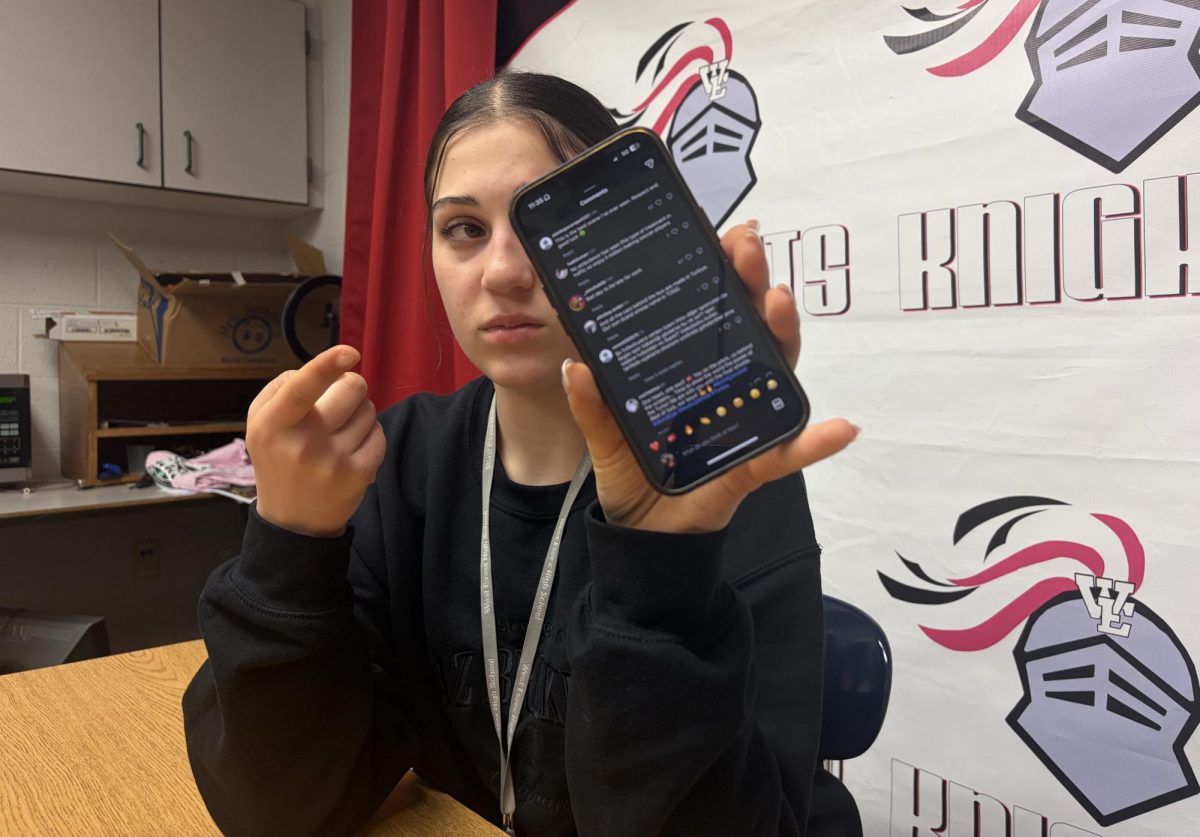
Meanwhile, traffickers, predators and opportunistic men continue to adapt their tactics, because as women learn new ways to protect themselves, predators innovate new ways to bypass those protections. Recent social media posts from New Jersey have amplified this reality. Stories about men approaching women in malls, parking lot distractions for offering five dollars to distract a woman from her car, ride-share impersonators and coordinated attempts to isolate women aren’t rare enough to just dismiss and forget about. The worst part is that none of this is new or surprising. Girls have heard the generations of women in their homes discuss stories on the news, such as these, since they were young. Whether each case is confirmed or anecdotal, the fear it creates is real because the conditions that make these threats possible are present.
And yet, the response from society is depressingly familiar: be more careful, be more aware, be more on guard. The burden is always on the women. We’re expected to just adjust our behavior, shrink our comfort, dim our freedoms and accept that this danger is just part of life.
But here is the truth: women’s safety should not be a DIY project.
So how do we fix this part of our society? We begin by acknowledging that women shouldn’t have to operate with the mental load of a security system. Safety isn’t a personal responsibility; it is a societal one. Young girls are consistently taught what red flags to look out for in boys and in public, while young boys are rarely taught how not to pose a threat to the women around them.
That means we need better public education, improved street and parking lot infrastructure, clearer reporting systems, empowering bystander culture and holding local governments accountable.
Better public education about trafficking and targeted crime that focuses on perpetrators, not victims’ choices, can open the eyes of those who are uncertain of the dangers that threaten them. Improved infrastructure–lighting, cameras, emergency call stations and monitored pedestrian zones can create a safer environment for public transit for women. Clearer reporting systems, including anonymous options, can help women so that they can report suspicious behavior without the fear of being minimized. Empowering bystander culture would teach men and other women how to intervene safely rather than ignore what they see. Holding local governments accountable for prioritizing safety funding rather than leaving women to fend for themselves would make women feel seen and safe instead of scared and sheltered.
All of this is because, at the end of the day, women are not the problem. Women’s existence in public is not the problem. The problem is a society that continues to treat women’s fear as background noise instead of a public emergency.
Women deserve to relax in public. We deserve to live without having to rehearse survival strategies. We deserve streets, stores and transit systems designed with our safety in mind, not as an afterthought, not as a viral warning, but as a standard. We cannot keep telling women to “be careful.” It’s time we start telling everyone else to “be accountable.”