Most students, teachers and parents agree that being an informed voter is an important skill for future adults to have. However, how schools handle elections and politics, especially at the local level, can create uncomfortable conversations. Questions include whether students know what politicians actually do, and what candidates’ positions are on important policies. Some people are worried that young people in America aren’t informed about elections and don’t care about politics as a whole. Schools have many great opportunities to help future voters learn about politicians and politics.
This November, New Jersey held elections for governor, state senators, assemblymen and many Board of Education members. Democrat Mikie Sherrill defeated Republican Jack Ciattarelli and will become New Jersey’s 57th representative. She will take office on Jan. 20, 2026, and will be the governor for the next four years. To help students understand how voting works, some West Essex teachers found ways to bring election discussions into the classroom.
“This year, it worked out perfectly that there was a governor’s race, so that we could talk a little bit about it in class,” history teacher Patrick McGlynn said. “And the election happens every four years, so it can come up when teaching current events.”
The supervisor of social studies and world languages, Laura Drago, has found that history teachers have used numerous ways to incorporate lessons on elections and the political process into their classes.
“Throughout their curriculum, they teach students about the rights of citizens, voting, the election process, the rule of law and our political process overall,” Drago said.
McGlynn believes there are naturally parts of talking about the issues and personal politics that teachers can’t really express and suggests that students speak at home with their families about which issues are important.
“Explaining what a candidate might do or why you’re electing a candidate should come from both parents and teachers,” McGlynn said. “We study both candidates from an independent point of view and take a look at how they might handle the issues.”
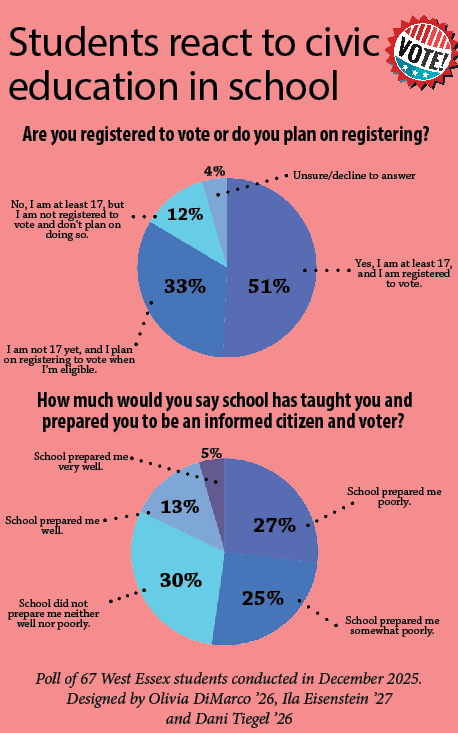
Overall, students should be educated about elections and local government in their classes, no matter their age. Many students registered to vote should be better informed about local government and its effects on their personal life. History teachers are provided the resources to teach civic education at school, but more resources should be available through school clubs and at home.
“We can only tell students about the importance of voting so much, and it’s up to you to actually want to get into it,” McGlynn said.
More civic education, which is learning about citizenship and government, should be put into history classes at every level. For example, in a class like AP Government & Politics, some of the topics they learn regarding voting shouldn’t be limited to students who choose to take that class. If opportunities come up to make government and politics more relevant to students’ lives, the school should take advantage of them.
“If the community can mobilize young voters to care about and get into voting, then there can be a seismic shift in voter numbers, potentially turning elections around,” McGlynn said.
Young voters have a big impact on the future of the country and can influence election outcomes, and they should know where they stand on the issues important to them.